


Poetics of the final part of the olonkho of the Vilyui epic tradition

https://doi.org/10.25587/2782-4861-2026-3-116-129
Abstract
The relevance of this study stems from the need for a systematic study of the poetics of the olonkho's final section as a whole. Unlike the northeastern tradition, where the epic's ending has already been studied, the Vilyui epic tradition has not yet been systematically examined in this regard. The aim of this article is to systematically examine the poetics of the olonkho's final section in the Vilyui epic tradition. The research objectives are aimed at identifying the following aspects of the olonkho's final section: its compositional role, its place in the narrative structure, and the specific application of epic poetic and stylistic devices. The study utilizes methods such as a systemic analysis of olonkho poetics, structural analysis, and continuous sampling. It was revealed that in epic traditions, the ring-shaped composition with its restoration of harmony serves a meaning-making function, while a happy ending, embodying the archetypal model of world order renewal, is a necessary element of the poetics. Furthermore, the fragmentary nature of texts is determined by external factors of recording, rather than by the peculiarities of the tradition itself. Despite apparent similarities, the ending contains quite diverse motifs and typical passages, which are determined by the plot-thematic type and the evolutionary features of olonkho poetics. It was determined that the final section of the olonkho is built on the stable motifs of a happy ending. However, an analysis of the Vilyuy tradition reveals variability: alongside archaic elements, later additions are also recorded. It was established that in the Yakut heroic epic olonkho, the ending, based on a system of epic formulas and typical places, is not simply the conclusion of the plot, but a meaningful compositional unit. In the Vilyuy tradition, it ranges from expanded, multi-stage versions to brief conclusions. The research aims to compare the poetics of the final sections of various epic traditions to form a holistic picture of the phenomenon under study.
Acknowledgements: Author gratitude to Shared core facilities of the Federal Research Center ‟Yakutsk Science Center SB RAS” for the opportunity to conduct research on the scientific equipment of the Center.
Funding: The article was carried out within the state assignment of the Ministry of Science and Higher Education of the Russian Federation No 075-00619-26-00 for 2026, research project No. 124030100136-9
About the Author
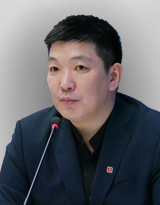
Aitalina A. Kuzmina
Institute for Humanities Research and Indigenous Studies of the North of Siberian branch of the Russian Academy of Sciences
Russian Federation
Russian Federation
References
1. Aleksandrov NS.–Ynta Nikiite. Kyor Buuraj: olongkho. Yakutsk: Bichik Publ., 2014. 333 p. (in Yakut)
2. Alekseev BA. Ehrbehkhtehi Mehrgehn: olongkho. Yakutsk: Bichik Publ., 2017. 152 p. (in Yakut)
3. Bakhtin MM. Literary critical articles. Moscow: Khudozhestvennaya literatura Publ., 1986. 543 p. (in Russian)
4. Borisov YP. Epic Formulas of the Northern, Central and Vilyuy Regional Traditions of the Yakut Olonkho: Comparative Aspect. Nauchnyi dialog. 2019, (12), pp. 120‒137. (in Russian). https://doi.org/10.24224/2227-1295-2019-12-120-137
5. Govorov DM. Invincible Myul'dzhyu Bege = Myuldzhyu Bege: olongkho: in 2 books. Book 2. Yakutsk: Bichik Publ., 2010. 320 p. (in Russian)
6. Grintser PA. Ancient Indian Epics: Genesis and Typology. Moscow: Nauka Publ., 1974. 420 p. (in Russian)
7. Duyakov GV. Kyys D'uuraja buhatyyr: olongkho. Yakutsk: Bichik Publ., 2011. 284 p. (in Yakut)
8. Emel'yanov NV. Plots of Yakut olonkho. Moscow: Nauka Publ., 1980. 375 p. (in Russian)
9. Eremeev SI.–Djedjegjes. Tjobjot Mjenik buhatyyr: olongkho. Yakutsk: Bichik Publ, 2017. 176 p. (in Yakut)
10. Efimova LS., Pavlova OK. Typology of the Yakut olonkho: the final part of the composition (based on the northeastern regional tradition). Vestnik of the North-Eastern Federal University: Eposovedenie. 2017, 1(5), pp. 48‒53. (in Russian)
11. Illarionova TV. Textual analysis of the olonkho “Mighty Er Sogotokh”: a comparative analysis of records from different periods. Novosibirsk: Nauka Publ., 2008. 96 p. (in Russian)
12. Kapustina YuA. Compositional framework in lyric poetry and epic poetry. Izvestia of the Volgograd State Pedagogical University. Philological sciences. 2016, 8(112), pp. 186‒19. (in Russian)
13. Kapustina YuA. Compositional frame and its place between similar phenomenia. Bulletin of Vologda State University. Series History and Philology. 2018, 2(9), pp. 42‒45 (in Russian)
14. Karataev VO. D'jergjelgjen sjujurjuk attaah D'iribinje Bootur: olongkho. Yakutsk: Alaas Publ, 2017. pp. 344 (in Yakut)
15. Karataev SN. Tong Saar bukhatyyr: olongkho. Yakutsk: Bichik Publ., 2004. 237 p. (in Yakut)
16. Kuz'mina AA. Olonkho of the Vilyui region: existence, plot-compositional structure, images. Novosibirsk: Nauka Publ., 2014. 160 p. (in Russian)
17. Kuz'mina AA. The plot-compositional features of the olonkho by C. N. Karataev “Syuyulledjin Bootur”. Philology: scientific researches. 2025, (9), pp. 154‒168 (in Russian). https://doi.org/10.7256/2454-0749.2025.9.75874
18. Kuz'mina EN. Index of typical places of the heroic epic of the peoples of Siberia (Altaians, Buryats, Tuvans, Khakassians, Shors, Yakuts): experimental edition. Novosibirsk: Publ. House of the Siberian Branch of the Russian Academy of Sciences, 2005. 1382 p. (in Russian)
19. Kyys Dehbiliieh: Yakut heroic epic. Novosibirsk: Nauka Publ., 1993. 330 p. (in Yakut and Russian)
20. Lord AB. Narrator. Moscow: Eastern Literature Publ., 1994. 368 p. (in Russian)
21. Lotman YuM. Semiosfera. Saint Petersburg: Iskusstvo–SPB Publ., 2010. 704 p. (in Russian)
22. Makarov SS. Poetics of Yakut olonkho: units and levels of lexical stereotypes: Candidate’s dissertation (Philology). Moscow: 2019. 363 р. (in Russian)
23. Mandzhieva BB. Textual criticism and poetics of the Maloderbetov cycle of the epic “Dzhangar” in the context of the epic tradition of the Kalmyks. Elista: Kalmyk Scientific Center of the Russian Academy of Sciences Publ., 2022. 416 p. (in Russian)
24. Martynov MZ. Uol Duolan buhatyyr: olongkho. Yakutsk: Bichik Publ., 2010. 248 p.(in Yakut)
25. Neklyudov SYu. Poetics of Epic Narrative: Space and Time. Moscow: Forum Publ., 2015. 216 p.(in Russian)
26. Olzkhuu O. The role of rising action in composition of the Mongolian heroic epos “Dzhangar”. Philology: scientific researches. 2019, 6, pp. 200‒206 (in Russian). https://doi.org/10.7256/2454-0749.2019.6.31582
27. Ondar MV. Features of the structures of the beginning and end in the texts of the Tuvan heroic epic. The world of science, culture and education / Mir Nauki, Kul’tury, Obrazovaniya. 2019, 5(78), pp. 473‒475. (in Russian)
28. Pyurveeva NB. The poetics of the heroic epic “Dzhangar”: Doctor’s dissertation (Philology). Ehlista, 2003. 347 p. (in Russian)
29. Reformatskii AA. Linguistics and poetry. Moscow: Nauka Publ., 1987. 264 p. (in Russian)
30. Robbek LV. Lexical and semantic features of the language of the Yakut heroic epic olonkho. Novosibirsk: Nauka Publ., 2014. 140 p. (in Russian)
31. Semenova LN. Semantics of epic space and its role in plot formation (based on the Yakut epic olonkho): Candidate’s dissertation (Culturology). Moscow: 2000. 160 p. (in Russian)
32. Tagrov NG. Omunnaakh-telenneekh Uol Ehr Sogotokh=Furious Ehr Sogotokh. Yakutsk: Publ. House of NEFU, 2012. 368 p. (in Yakut and Russian)
33. Timofeev FN. Tyumen Tyuyurej buhatyyr: olongkho. Yakutsk: Dani-Almas Publ., 2022. 144 p. (in Yakut)
34. Titarov AT. Hardaachchy Bergen: olongkho = Hardaachchy Bergen: olonho = The Hero Khardaachchi Bargen the Proud: olonkho. Novosibirsk: Nauka Publ., 2022. 199 p. (in Yakut, Russian and English)
35. Tomashevskii BV. Literary Theory. Poetics: Tutorial. Moscow: Aspekt Press Publ., 1996. 334 p. (in Russian)
36. Tomskaya DA. Yuchyugehi Yuedzhyugyuiehehn, Kuһagan Khodzhugur = Yuchyugehi Yudyugyuiehn and Kusagan Khodzhugur. Yakutsk: Publ. House of IHRISN SB RAS, 2011. 376 p. (in Yakut and Russian)
37. Kharitonov IM. Kuldus Bege: olongkho. Yakutsk: Bichik Publ., 2009. 200 p. (in Yakut)
38. Shklovskii VB. About prose theory. Moscow: Krug Publ., 1925. 267 p. (in Russian)
39. Yadrikhinskii PP. The heroine girl Dzhyrybyna Dzhyrylyatta. Yakutsk: Saidam Publ., 2011. 448 p. (in Yakut and Russian)
40. Yakut heroic epic. Mighty Er Sogotokh. Novosibirsk: Nauka Publ. Siberian Publ. Company of the Russian Academy of Sciences, 1996. 440 p. (in Yakut and Russian)
Review
For citations:
Kuzmina A. Poetics of the final part of the olonkho of the Vilyui epic tradition. Epic Studies. 2026;(3):116-129. (In Russ.) https://doi.org/10.25587/2782-4861-2026-3-116-129
Views:
3
JATS XML









 Email this article